R Examples
To learn more about R, check out my open-access textbook Deep R Programming.
How to Install
To install the package from CRAN, call:
install.packages("lumbermark")
Note
For best performance, advanced users will benefit from compiling the package from sources:
Sys.setenv(CXX_DEFS="-O3 -march=native")  # for gcc and clang
install.packages(c("quitefastmst", "deadwood", "lumbermark"), type="source")
To enable OpenMP on macOS, execute brew install libomp, and then call in R:
Sys.setenv(CXX_DEFS="-O3 -march=native -Xpreprocessor -fopenmp")
install.packages(c("quitefastmst", "deadwood", "lumbermark"), type="source")
Basic Use
Note
This section is a work in progress. In the meantime, take a look at the documentation of the lumbermark function and the paper [2].
wut/z2 is an example dataset with five clusters of rather non-homogeneous densities. Lumbermark separates them correctly with no need for further parameter tuning:
Z2 <- as.matrix(read.table("z2.data.gz"))
library("lumbermark")
lumbermark_labels <- lumbermark(Z2, 5)
plot(Z2, asp=1, ann=FALSE, col=lumbermark_labels)
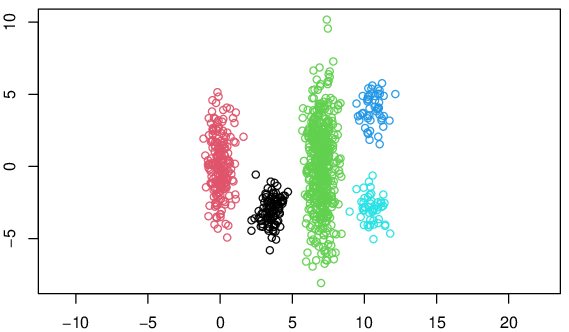
Figure 4 The z2 dataset
Outlier Detection in the Case of Clusters of Heterogeneous Densities
The recently-developed Deadwood outlier detection algorithm works already quite well in the case of clusters of heterogeneous densities. Still, we can combine it with Lumbermark to detect outliers in each detected cluster separately.
par(mfrow=c(1, 2))

library("deadwood")

is_outlier_homo   <- deadwood(Z2)
plot(Z2, asp=1, xlab=NA, ylab=NA,
    col=c("#00000055","#ff333333")[is_outlier_homo+1], main="Deadwood")

is_outlier_hetero <- deadwood(lumbermark_labels)
plot(Z2, asp=1, xlab=NA, ylab=NA,
    col=c("#00000055","#ff333333")[is_outlier_hetero+1], main="Deadwood+Lumbermark")
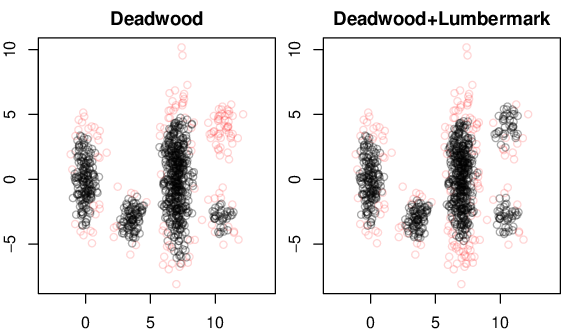
Figure 5 Outlier detection of the z2 dataset